
The biggest paradox about the Church is that she is at the same time essentially traditional and essentially revolutionary.
– Thomas Merton (New Seeds of Contemplation, 1961)
Thomas Merton, a Trappist monk and theologian, wrote in 1961 that the Church is both deeply traditional and deeply revolutionary. When I read those words, I had the same thought: They describe marriage just as well. Marriage always lives in tension. On one side, there is tradition. On the other, there is change. We feel this tension in many areas:
- Why we get married
- Roles in the relationship
- Work and money
- Children
- Sexual intimacy
So what is marriage—tradition or revolution? It is not one or the other.
It is both.
Like the Church, marriage holds these forces together. When it does, it becomes something more than a relationship. It becomes a witness—one that reflects the love between Christ and the Church.
The Illusion of “Traditional Marriage
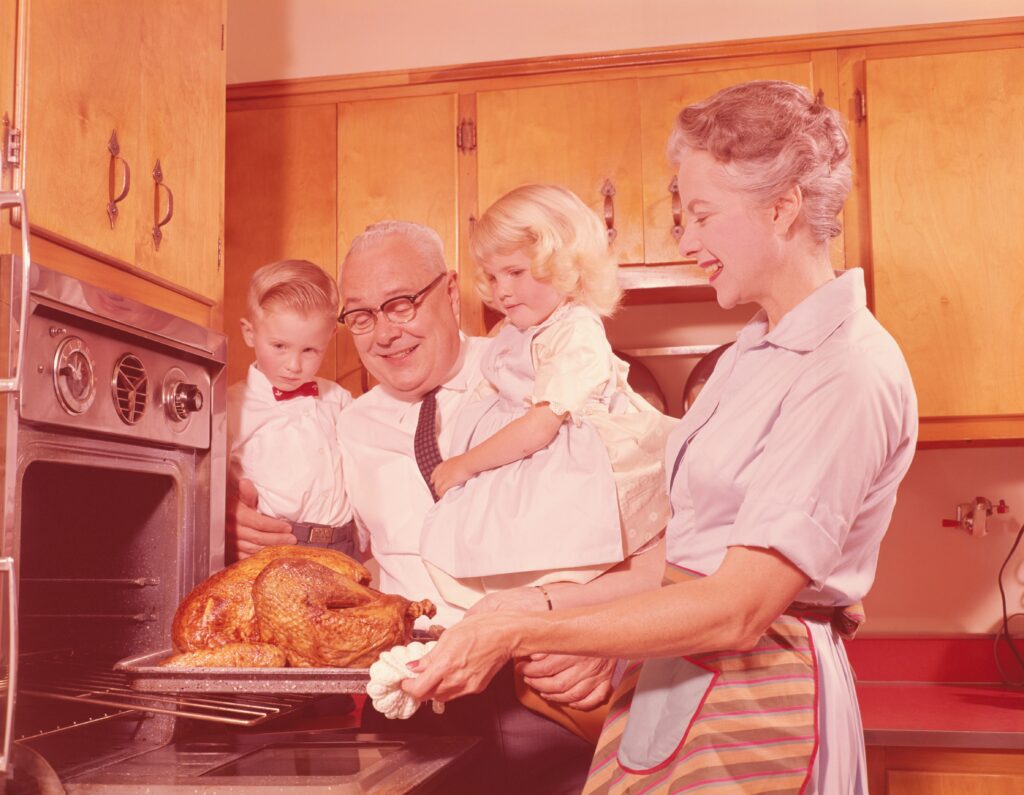
If you spend time on social media, you have likely seen the rise of the “trad wife.” “Trad” means traditional. These influencers promote a return to older models of marriage and family life. They present it as the answer to modern problems. But look closer. What’s often being offered isn’t tradition at all. It’s a curated lifestyle. Think:
- Vintage aesthetics
- Carefully staged homes
- Designer brands like Anthropologie
- Magnolia-style living
It feels like Little House on the Prairie—but upgraded and monetized. In many cases, this is not tradition. It is consumerism dressed up as tradition. It promises stability, but it is built on an image. And anything built on an image will not last.
Merton warned that choosing only one path leads to trouble. The same is true in marriage.
- Tradition alone leads to stagnation
- Revolution alone leads to instability
Revolution without depth is just a new coat of paint on rotting wood. So the question becomes: How do we hold both? How do we stay rooted while still growing? Let’s look at two key areas where this can show up in marriage.
Power turned Upside Down
Every relationship has power. Marriage is no exception. Power is simply the ability to influence. But in marriage, it can and often becomes a struggle. It shows up when:
- One partner needs the final word
- One refuses to listen
- One dismisses the other’s perspective
This creates imbalance—and eventually, disconnection.

The traditional wedding vows that we are most familiar with were written by Thomas Cranmer in the Book of Common Prayer in 1549. Here is the most commonly quoted paragraph from those vows (taken from the 2019 prayer book):
“In the name of God, I (your name) take you, (spouse’s name) to be my wife/husband, to have and to hold from this day forward, for better for worse, for richer for poorer, in sickness and in health, to love and to cherish, until we are parted by death, according to God’s hold Word. This is my solomn vow.”
These vows are ancient. But they are also deeply radical. Here is what I mean.
Modern research by John Gottman and Julie Gottman highlights a key factor in healthy marriages: Accepting influence This means: Letting your partner shape your thoughts, decisions and actions. Not controlling. Not defending. Not overpowering.
But intentionally choosing listening, valuing, and adjusting. Here’s the striking part: Traditional vows already assume this. Both partners make the same promise. Both commit to honoring each other—no matter the circumstances.
That is revolutionary.
Why?
Because human nature tends to do the opposite. We make love conditional. We protect our position. We demand our way. Marriage calls us to reverse that.
It turns power upside down.
And in doing so, it reflects the life of Christ—who used power not to control, but to serve.
Support for Growth and Image Bearing
Marriage is not just about staying together. It is about growing together. One of its deepest purposes is mutual formation. In a Christian marriage, that formation has a clear direction: To reflect Christ more fully. I make this claim in my book, Revolutionary Marriage.
If you look again at the traditional marriage vow, you will find the phrase, “to love and to cherish.” At first glance, “to love and to cherish” sounds simple. But it carries much more weight. Research again helps us here. The Gottmans describe something called: Positive Sentiment Override
This means choosing to see the best in your spouse—even during conflict.
It looks like:
- Knowing your partner deeply
- Assuming the best about them
- Speaking to their strengths
- Encouraging their growth
- Defending their character in hard moments
This is not passive. It requires intention.
You must:
- Learn your partner
- Call out their best qualities
- Reinforce those qualities often

In a Christian framework, this goes even further.It means asking: How does my spouse reflect Christ?
And then saying it out loud.
Not to correct. Not to criticize. But to build up. This changes the marriage. It creates an environment where both partners:
- Feel seen
- Feel valued
- Feel called upward
What seems like a traditional phrase —“to love and to cherish”— becomes a powerful force for transformation. It’s revolutionary.
It’s Both
Marriage is not simply traditional. And it is not simply revolutionary. It is both. Tradition gives marriage its roots. It anchors us in something stable and enduring. But marriage does not stop there. It calls us forward. Into: deeper love, greater sacrifice, and fuller understanding. Real marriage is not just inherited. It is built. Real marriage is not just preserved. But transformed.
Marriage survives through tradition. But it comes alive through transformation.


Leave a Reply